The Parable of the Sower
1. Scriptures:
Matthew 13:1-9 and 18-23
Mark 4:1-9 and 13-20
Luke 8:4-8 and 11-15
2. Introduction
It is one of the most important parables ever taught by Jesus. It is also the most popular parable for readers in the Bible. It is found in three of the gospels.
Jesus taught this parable speaking from a boat in the Sea of Galilee. We can imagine the crowd listening to Jesus while farmers were sowing fields in the background. The farmer would carry the seed in a bag slung around his neck. He would then cast the seed by hand. Jesus is speaking to the people in terms of something they saw on a regular basis, and which they readily understood - a farmer sowing his field.
Many of his listeners were farmers, or had worked on a farm at some point in their lives.
Jesus told the parable to the multitude but Jesus gave the explanation of the parable only to His disciples at the end. The parable of the sower is one of the few parables where Jesus gives an explanation to His disciples. 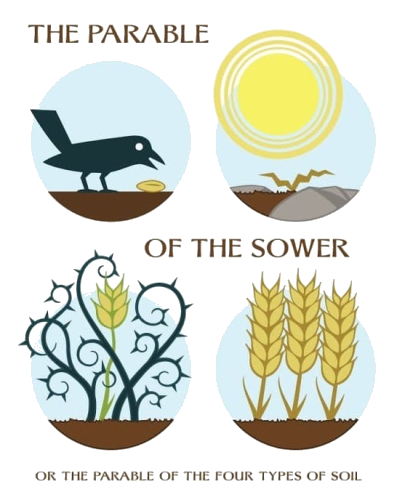
3. Important points to ponder.
1. A sower went out to his field. Where is the field?
2. The sower who went out to sow. Who is the sower?
3. The seed which was sown. What is the seed?
4. The soil where the seed fell. What is the soil?
5. There were four places where seed fell. What do the four places represent?
6. Why do some understand the gospel and others do not? This parable answers it.
7. What can we learn from this parable?
Jesus often taught truth by means of a parable, a story that uses something familiar to the hearers to explain something that is not familiar to them. One of Jesus' most famous parables is that of the sower and the seed. It is riveting in its truth, if you discover "the seed principle" it teaches, you will discover a secret that will transform your very existence.
4. Spiritual Goal
The goal of this message on the "secret" of the seed is to explain the importance of the truth that we first receive the gospel message in seed form, packed with all the potential of God's Word. To show that the way we receive the Word of God can set the tone, in our spiritual lives and growth in our walk with the Lord. Jesus wanted His disciples to know that success in the growth of the seed had nothing to do with the seed itself; the success of the seed had everything to do with where it landed.
5. Meaning of some terms in this Parable.
a. Where is the field?
The field was the multitude in front of the master teacher. This is the world outside
for us today. The seed of the gospel is being sown everywhere in this present age.
b. Who is the sower?
Matthew 13:37 give an answer "The Son of Man". We are not specifically told in this parable who the sower was but it is logical to conclude that it was Jesus Christ Himself. He sowed the seed of the good news during His ministry on earth. Today He uses preachers, teachers and other Christians, who are His representatives here on earth.
c. What is the seed?
This is what is "heard". The seed is "the word of the kingdom." In Luke 8:12 we see that the seed is "the Word of God". The Word of the Kingdom is the good news of the gospel.
The message which needed to be preached is, "Repent and accept Jesus Christ, as Savior and King so that you may have a part in His kingdom which now is in the hearts of all true Christians and shall be a reality at the second coming of Christ." The seed is the word of God.
d. What is the soil?
The soil represents people who hear the Word. The soil also represents the human heart, so the word of God falls on four different types of hearts. Please note: The same seed was sown, it produced four different results.
e. There were four places where seed fell.
1. The first seed that was sown fell on hardened soil and produced no fruit.
2. The second seed was sown on rocky soil and produced some fruit but only for a short time.
3. The third seed was sown on thorny soil and also produced some fruit for a short time.
4. The fourth seed was sown on good soil and produced three different amounts of fruit: some thirty, some sixty and some a hundredfold. Fruit is produced or not produced in our lives according to our response to hearing the word of the kingdom.
6. The soils are four kinds of human hearts.
a. First there is the hard heart
The seed falls along the roadside. This represents people who hear the Word of God but never really believe.
b. Then there is the shallow heart
The seed falls on stony ground. This signifies the people who hear the Word of God and receive it with joy but there is no root to sustain them, they wither.
c. Then there is the crowded heart
That is the seed that falls where weeds choke out its growth. Slowly and surely these people busy with their cares and riches of the world just loose interest in the things of God.
d. Lastly there is the fruitful heart
The seed falls on good ground and then the plants produce a rich harvest. This is the heart that receives the Word of God.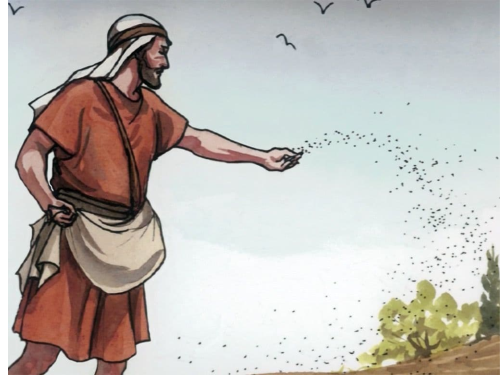
7. Interpretation of this parable
Jesus gave an explanation to His disciples of this parable.
Matthew 13:19 explains the wayside ground or soil.
Matthew 13:20-21 explains the stony ground
Matthew 13:22 explains the thorny ground
Matthew 13:23 explains the good ground.
Although the planted seed was the same, the results from the soil were different.
Christ taught the word of the kingdom:
a. Some did not respond because their heart was hardened.
b. Others responded for a period of time then fell away.
c. Another group received the word and became fruitful. They produced three different amounts of fruit:
c1. some produce thirty;
c2. some produce sixty and
c3. others produce a hundredfold
8. Why do some understand the gospel and others do not?
This parable answers it. God in His sovereignty has determined that those with good and honest hearts will understand, accept, and keep His Word and bear fruit with patience. It is all a matter of the attitude of your heart.
9. What can we learn from this parable?
This powerful seed is being dropped into human hearts all over this world now.
There is a kingdom now in a spiritual sense. It is an invisible, spiritual kingdom in the hearts of all true believers in Christ. Christ wants men to know that all of life is not contained in what we see, touch, smell, hear and taste. There is more to life than the physical. There is a spiritual kingdom beyond what we can experience with our five senses. This spiritual kingdom contains the answers to the most problems of man.
The value of this parable becomes clearer in the light of the explanation from Jesus and by it we can see ourselves as we really are in regards to how we have received the Word of God into our lives.
Understanding the four types of soil in the Parable of the Sower is the key to understanding this parable.
10. Explanation of the Four kinds of Hearts
This parable is dealing with human responsibility. Every man is held accountable to respond to the truth. There are three basic enemies: the world, the flesh and the devil.
A. The Hardened Heart (First Soil)
On the Path (Matthew 13:19; Mark 4:15; Luke 8:12).
The seed was falling on the path. The powerful seed lay on top of the hard soil and never entered the ground. It was easy for the birds to snatch it.
1. The good news was rejected because they have hearts which is hardened by sin.
2. They have no spiritual understanding of the truth and kingdom of God.
3. They have no desire to learn more about God and the kingdom of heaven.
4. Their hearts are hardened to the truths and the kingdom of God.
5. The devil (typified as "the birds of the air") comes and snatches away the word.
6. They are hearers only (They hear but do not understand)
In Luke we see that the Devil snatched the truth from the hearts of the wayside hearers that they "may not believe and be saved" (Luke 8:12). The path hearer fell victim to the Devil, for in his rejection of Christ, he lined himself up with Satan and His kingdom of darkness. 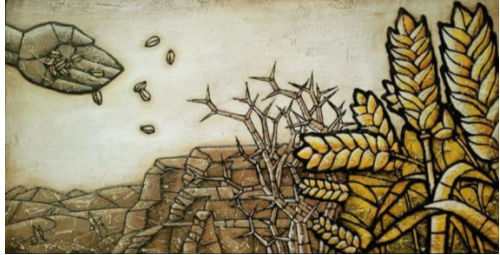
B. The Shallow Hearts (The second soil)
The rocky Soil (Matt 13:20-21; Mark 4:16-17; Luke 8:13).
The seed fell in shallow and rocky ground. The seed sprang up quickly and begun to grow. The plant withered away in the sun.
1. They hear the word and receive it with joy and enthusiasm
2. They hear about the kingdom and are excited about it.
3. They are ruled by their emotions.
4. They accepted the message but they never really make it their own.
5. They have a shallow religious experience that never takes any spiritual root.
6. They quickly falls away when pressure, persecution and temptation comes.
7. When trials became hard they then want to give up and return to the world.
8. They are unable to stand strong on the Word of God
9. They later turn away from the truth they have learned.
10. They lack a depth of conviction, are shallow in heart and understanding.
11. They are unwilling to pay the price. (They hear and understand)
The stony rock hearers are not saved because the Gospel of Luke says: "which for awhile believe" (Luke 8:13). When the trials, crises, tribulations, afflictions and persecutions come, they will stumble and withdraw form Christ because there was no true saving faith in the first place.
The stony rock hearers "endure for a while". The Greek word used actually means "seasonal." When it is seasonable and fashionable to believe the gospel they do, but their whims change like the seasons and shift like the winds. The enemy is their flesh that lured the stony rock hearers from the Lord Jesus Christ.
C. The Crowded Heart (The Third Soil)
The Thorny Soil (Matthew 13:22; Mark 4:18-19; Luke 8:14).
The seed falls where weeds and thorns choke it much later. The seed is in competition with other seeds. It is choked by the thorns when it grows up.
1. This seed seems to have a better chance for growth and development.
2. The soil in which they grow is fertile.
3. They hear the message of Christ and His kingdom and seem to accept the truth.
4. The seed of the word of God seemed to take root
5. They are busy with their cares and riches of the world - "the anxieties of this age".
6. They become unfruitful because the things of the world choke them.
7. This well describes people who lead a "double life" Man cannot serve two masters.
8. They have done religious works but not works produced by true saving faith.
9. They loose interest in the spiritual things of God. (They hear only)
The thorny ground hearer does not produce spiritual good works brought about by the Holy Spirit. He "becomes unfruitful" and brings no fruit "to perfection or maturity" (Luke 8:14). Christians are warned not to conform to this world system.
There are four things that finally get to the thorny ground hearer - the cares of the world, deceitfulness of riches, pleasures of life, lusts of other things and Luke and Mark name the lust of pleasure (Luke 8:14; Mark 4:14, 19-20). Anxiety, riches and pleasure choke out the word of the kingdom.
The "cares of the world" are literally translated "the anxieties of this age." There are many cares, anxieties and frustrations of life because we live in this present age and the god of this age is Satan himself. These believers are mostly concerned with what they can get here and now in the material realm and how they can make a name or reputation for themselves.
D. The Fruitful Heart (The Fourth Soil)
The Good Soil (Matthew 13:23; Mark 4:20; Luke 8:15)
The good ground is the hearer with a good and honest heart. The fruitful heart receives the Word of God in their hearts.
1. The seed landed in ploughed and fertile soil and started to grow.
2. The seed had the depth of soil, space, and moisture to grow and produce a harvest.
3. This seed multiplied and yielded thirty, sixty or hundredfold crop.
4. They understands the Word, accepts it, keeps it, and bears "fruit with patience"
5. The good soil hearer "hears the word and understands it" - Matthew 13:23a
6. The good soil hearer "indeed bears fruit and produces" - Matthew 13:23b
Luke adds that he hears "the word with a noble and good heart" and then "keeps it and bears fruit with patience" (Luke 8:15).
7. People who will understand the Word of God.
8. People who will keep it and with patience and produce fruit in their lives!
9. They "Received the word will all readiness"
10. They will searched the scriptures to find out the truth - Acts 17:11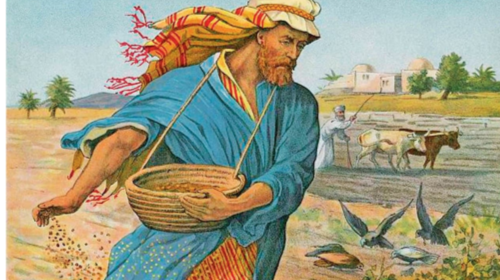
11. What kind of "fruit" will the "Fruitful Heart" (Good Soil) one bear?
There are different kinds...
a. The fruit of winning souls to Christ - Romans 1:13
b. The fruit of practical holiness - Romans 6:22
c. The fruit of sharing material things - Romans 15:27
d. The fruit of the Spirit (a Christ-like character) Galassians 5:22-23
e. The fruit of good works - Colossians 1:10
f. The fruit of praise & thanksgiving - Hebrews 13:15
12. What can we learn from the Parable of the Sower?
There are five lessons.
a. There will be people who will not understand the Word of God.
Jesus said that some people who will hear God's word will simply ignore what they hear. Before the seed fall in the soil it will be taken away. There is no time for it to drop down to your spirit. They were unwilling to understand or deceived. Satan snatches the Word of God away from their hearts.
b. We must endure until the end.
We must realize that it is not enough to simply receive God's Word. It does not mean that once we have it in our life we will have it forever. There will be tribulation and persecution caused for having the Word of God in our life. We must guard God's word in our heart with all our might.
c. Set your priorities in your life
This world is full of thorns. There are four things:
1. Cares of the world,
2. Deceitfulness of richness,
3. Pleasures of life and
4. Lusts of other things which choke the Word of God.
We need to check what things in our life PREVENTS the seed to grow.
d. We must bear fruit
As Christians we must bear fruit. While it is true that there are many people who have received the word of the Kingdom and failed to keep it, there are still those who received the word, kept it and nourished it. We can learn the characteristic of a person who has a fruitful heart. There are five things we need to do:
1. Hear the word with a noble and good heart,
2. Accept the word,
3. Understand the word of God,
4. Keep the Word of God in our heart and
5. Bear fruit.
e. The parables are not for everyone.
This might discourage us to share the good new. Jesus knew that every person has their own time. The important thing is that we need to do our part. We sow the seed and allow God to give the increase. He is the Almighty, Sovereign and Infinite God. He knows who to call to His Kingdom at that moment. We are simply tools in God's hands and we must be ready to do whatever it is what He wants us to do.
13. Conclusion on the Parable of the Sower
1. This parable is dealing with our human responsibility. Every man/woman is held accountable to respond to the truth.
2. There are three basic enemies: the world, the flesh and the devil. They will do everything to prevent the truth to grow in your heart.
3. It is a matter of the attitude of your heart towards the Word of God. This will determine the destiny of your soul. "Therefore take heed how you hear" (Luke 8:18)
4. When Jesus finished telling His parable of the Sower, He cried out: "He who has ears to hear, let him hear!" - Matthew 13:9
5. Clearly from the explanation of Jesus Himself, we learn that not all those who have ears to hear, really listen!
6. It is important that we listen well when God's Word is being proclaimed, for that is how faith is obtained - Romans 10:17
7. It is important that we do some searching in the Word of God to get to know the truth and what He has done for you. The Holy Spirit will lead and guide you.
8. Maybe you identified yourself now in one of those groups who did not produce any fruit and you now understand this parable. You received the Word with readiness. All you need to do is to repent today. It is not too late. God is patient. God's grace is still there for you. You can make a new commitment to Him. He will gladly accept you!
Dear friends, may you truly have a good and noble heart ... hear, examine, understand, and accept the gospel of Christ and the gospel of His kingdom