Parable of the Mustard Seed
Scriptures: Matthew 13:31+32, Mark 4:30-32, Luke 13:18+19
Matthew 13:31-32 (NIV)
"He told them another parable: The kingdom of heaven is like a mustard seed, which a man took and planted in his field. Though it is the smallest of all seeds, yet when it grows, it is the largest of garden plants and becomes a tree, so that the birds come and perch in its branches."
Mark 4:30-32 (NIV)
"Again he said, What shall we say the kingdom of God is like, or what parable shall we use to describe it? It is like a mustard seed, which is the smallest of all seeds on earth. Yet when planted, it grows and becomes the largest of all garden plants, with such big branches that the birds can perch in its shade."
Luke 13:18-19 (NIV)
"Then Jesus asked, What is the kingdom of God like? What shall I compare it to? It is like a mustard seed, which a man took and planted in his garden. It grew and became a tree, and the birds perched in its branches."
A. Introduction.
Jesus gave two parables on the Growth of the Kingdom. These two are parable of the Mustard seed and the parable of the Leaven. The Parable of the Mustard the seed is taken from the garden or field while the parable of the leaven is used at home. Jesus did not give an explanation on these two parables.
The parable of the mustard seed is found in three gospels, Matthew 13:31+32, Mark 4:30-32 and Luke 13:18+19.
There are a few differences between them and the following terms are used:
The kingdom of Heaven (Matthew) - The kingdom of God (Mark and Luke)
Planted in his field (Matthew) - Planted in his garden (Luke)
Becomes a tree (Matthew and Luke) - becomes the largest of all garden plants (Mark)
Perch in its branches (Matthew and Luke) - perch in its shade (Mark)
Mark asked a question - or what parable shall we use to describe it? Not in the others.
It seems in the Gospel of Luke, that Jesus uses this parable at another time in a different setting but I am not sure. It might be useful to end the possible confusion between the "kingdom of heaven" as spoken of by Matthew and the "kingdom of God" spoken of by Mark and Luke. They are both the same. This is a small parable, only two or three verses, with a very big meaning.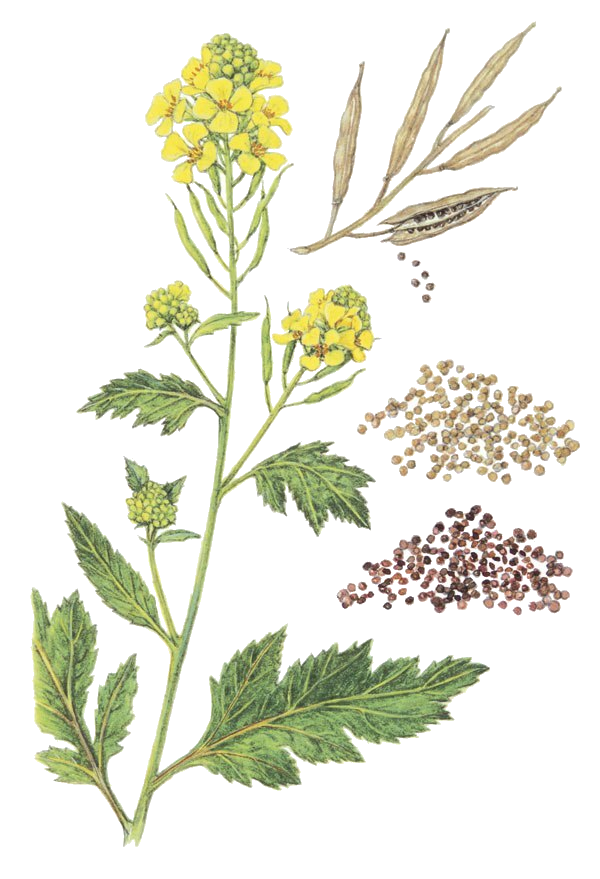
B. The Plant itself.
1. The Mustard seed was generally the smallest seed sown in a garden or field.
2. The mustard seed is a very small but when it is grown it becomes a very big plant.
3. The mustard plant is well known for its hot-flavored seeds
4. This plant attracts many birds for its seeds in the pods.
5. As a plant, it reaches ten, sometimes fifteen feet in height
6. In the fall of the year, its branches have become rigid, and the plant often serves as a shelter for birds of many kinds (William Hendricksen - Commentary on Matthew)
The mustard seed plant was planted in an open field rather then a garden because of it size. It was a giant of the shrubs so large that its branches spread out like a tree. No wonder that it refers to a tree in some of the gospels. Such a plant would attract many birds. The seeds will be ideal for the birds to eat on this plant. So the presenter of the parable is familiar with the scene.
C. Facts about Mustard
1. There are three types of mustard - black mustard, brown mustard or white mustard.
2. Mustard is an important spice in many regional foods.
3. The edible leaves can be eaten as mustard greens.
4. Mustard seeds are a rich source of oil and protein.
5. Grinding the seeds and mixing them with water, vinegar or other liquids are turned into a "paste" known as mustard.
6. The mustard seeds which Jesus spoke about were likely a wild mustard plant, which grows wild in North Africa, the Middle East and Mediterranean.
D. Mustard Seed in the Bible
1. Its seed was used frequently to describe anything that is small in its beginning.
2. Jesus used it on another occasion to describe one's faith - Matthew 17:20. In other words, their faith was so little or small, it could not even be compared to a little grain of mustard. But with faith as much as a mustard seed, they would be able to move a mountain.
3. In Luke 17:4-6 He used "mustard seed faith" to refer to total forgiveness.
4. In the parables of the mustard seed in three gospels. (Matthew 13:31+32, Mark 4:30-32 and Luke 13:18+19). It is a very short parable.
E. Parable of the Mustard Seed.
Jesus told two parables in which he describes the rapid and phenomenal growth of the Kingdom. One is in the parable of the mustard seed where Jesus portrays the extensive growth of the Kingdom in the parable.
Jesus is teaching them about the kingdom of heaven and the kingdom of God.
Jesus was preparing His disciples concerning the principles of the Kingdom. He was giving them insight on what the "Kingdom of God" would be and look like, as well as what to expect so that they would not be caught off guard or surprised when they would be confronted with and experience certain things in their not too distant future.
He was preparing them for their mission even though at the time they really did not grasp what that mission was to truly be. We know that later on, the Holy Spirit would bring all these teachings and parables back to their remembrance as they were released to fulfill their commission of preaching the Kingdom to the uttermost parts of the earth.
F. Small beginnings.
One of the lessons is the importance of little things. It is also valuable. The little mustard grain does not look important but man's experience teaches him not to minimize it. So the little things in life should not be discounted.
Jesus himself said: "Pay attention to the little things". The branches of the mustard "tree" are not in the main focus of Jesus attention any more than the man who sowed the seed or the nests that were made on the tree branches. The point of this parable is simply that the mustard seed grows into a "tree" large enough for the birds to nest in it. The man who sowed the seed, the field or garden, the nests, the birds, are all incidental to the central truth of the parable - The Kingdom of God. 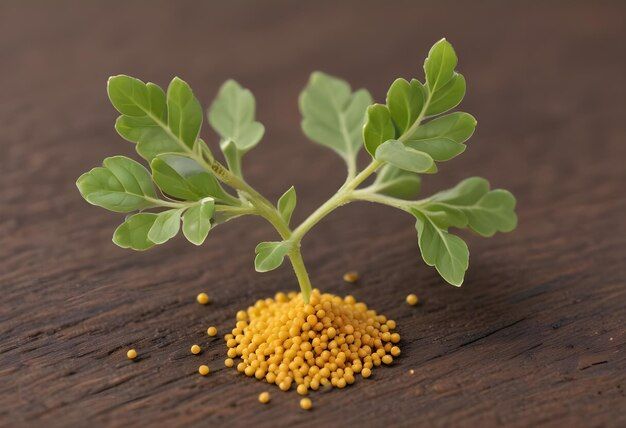
G. Symbols used in the three gospels of this parable.
1. Man
2. Mustard Seed
3. Field / Garden
4. Kingdom of heaven / Kingdom of God
5. Tree / Garden plant
6. Branches
7. Birds
8. Shadow
We will look deeper into each symbol.
H. Explanation of the Symbols
1. The Man
The "man" - based on a parable Jesus gave "The parable of the Sower" Jesus' expresses that the term "man" used in that parable would be referring to Himself, the "Son of Man." (Matthew 13:37). Jesus is the one who is referred to as "man" in this parable.
2. The Mustard Seed
The KJV refers to "grain of mustard seed." "Mustard seed" is translated from the Greek word sinapi. This simply means "mustard." The word "grain" is kokkos, and it means a "grain" or "kernel." Thus, the Bible really says, "kernel of mustard."
Jesus is not talking about faith in this parable. The use of the "mustard seed" in this parable must be taken in the context of what Jesus is teaching on - the "Kingdom of Heaven" here on earth. From the parable itself, we see that the mustard seed is the beginning of something that grows into something much bigger.
Jesus was using the "mustard seed" in reference to the His disciples, the Church, the Body of Christ and also "children of the kingdom". (Matthew 13:38)
3. Field / Garden
A different word is used in each of the Gospel accounts. The "field" - based on another parable, Jesus expressed and explained that the term "field" was referring to the world. Jesus says in Matthew 13:38 the symbol of the field stands for the world (kosmos - the earth or the world system).
Mark's account says, "earth." This is from the Greek word gē. It means "soil or ground, land, region, country or the entire earth". In every other place in Mark 4 where this word is found, it means "soil" or "ground".
Luke uses the word, "garden." The Greek word is kēpos, and it means "garden." Notice that it says, "his garden," or an even better translation would be, "his own garden." I believe this is a reference to the specific land in which the mustard seed is sown, Israel. The seed was planted on the earth, in the land, and specifically, in Israel.
4. Kingdom of heaven / Kingdom of God
The kingdom of heaven (Matthew) and the kingdom of God (Mark and Luke) are both the same. So the purpose of these parables is to explain the mysteries of the kingdom of heaven / God. The kingdom of heaven continues to grow and spread out is branches to those who will accept it.
5. Herb / Tree
One of the most profound symbolic meanings attached to trees in the Bible is the concept of life and growth. Trees represent the abundant blessings that come from God and the flourishing of His creation. Trees are a symbol of strength and stability.
Mark says that the seed "grows and becomes the largest of all garden plants." "Herbs" is from the Greek word "lachanon" and it means herbs and also means vegetables.
Luke says the seed "grew and became a tree." "Tree" is from the word "Dendron" which is from the word "drus", this is an oak tree. This is talking about a woody tree, not a vegetable. The World English Bible makes Matthew's explanation clearer: "whenever it is grown, it is greater than the garden vegetables and becomes a tree." Mark says that the seed becomes "the largest of all garden plants." In other words, the mustard seed grows into something beyond mustard. In fact, Jesus said it grows into a big tree. Notice that it is not a shrub. It is not even a small tree. It is a big tree. Just imagine from a very small seed to a big tree.
6. Branches
Something we see in all three Gospel accounts is that the tree has branches; Mark says, it "shoot out great branches." Branches are divisions that stem from a main trunk. If you search a concordance, you will find that this natural explanation is found throughout the Bible. Whatever the tree is, we must expect that it will have divisions or branches. The branches are part of the tree and remains part of the tree. As the tree grows new branches gets into place. This speaks about expansion.
7. Birds
In some of the translations it speaks of "birds of the air". This has a negative meaning as we saw in the Parable of the Sower. It represents the enemy who come and snatches away the seed, which we found in this parable.
My understanding is that in the context of the parable the birds represent a positive meaning or even both (negative and positive). In the Bible we see that God will provide for the birds (Matthew 6:26). Jesus uses this expression "birds (fowls) to show us how God takes care and provide for them. How much more will He take care of His own people?
Many birds are seed eaters and the mustard tree is ideal for birds to get seeds. So birds will dwell in this tree for food and also for shelter. Matthew and Luke say that the fouls or birds (both translated from the same Greek word) of the air "lodge in the branches" of the tree.
Mark says that they "lodge under the shadow of it." Lodging in the branches of a large tree could very well be to lodge in its shadow. The word "lodge" is from "kataskēnoō". It literally means to "camp down." In Jesus' explanation of the Parable of the Sower, He said that the fowls of the air were the "wicked one".
(Matthew 13:19). It could also refer to the "wicked ones" in this parable. We just need to be alert for the enemy and his plans.
8. Shadow
Mark's account says that the birds "lodge under the shadow of" the tree. The word "shadow" is (σκιά - skia). It means shadow or shade.
I am reminded of Psalm 91 (צֵ ל - ṣēl) which refers to the shelter (shadow) of the Most High. So I see the shadow in a positive way in the parable with the mustard seed as Jesus was teaching on the Kingdom of heaven or God.
Jesus did not say in this parable - the kingdom of God is certainly a blessing to all who take refuge in its "branches".
(a). Romans 14:17 (NIV) "for the kingdom of God is not food and drink, but righteousness and peace and joy in the Holy Spirit"
(b). Matthew 11:28-30 (NIV) "Come to me, all you who are weary and burdened, and I will give you rest. Take my yoke upon you and learn from me, for I am gentle and humble in heart, and you will find rest for your souls. For my yoke is easy and my burden is light."
To those seeking rest for their weary souls, the King offers His tender invitation to come to Him and enter His kingdom of rest.
With this simple parable, Jesus offers encouragement to all following Him. We are all part of something greater that would grow and bless the world.
I. What is needed to accomplish a great harvest?! 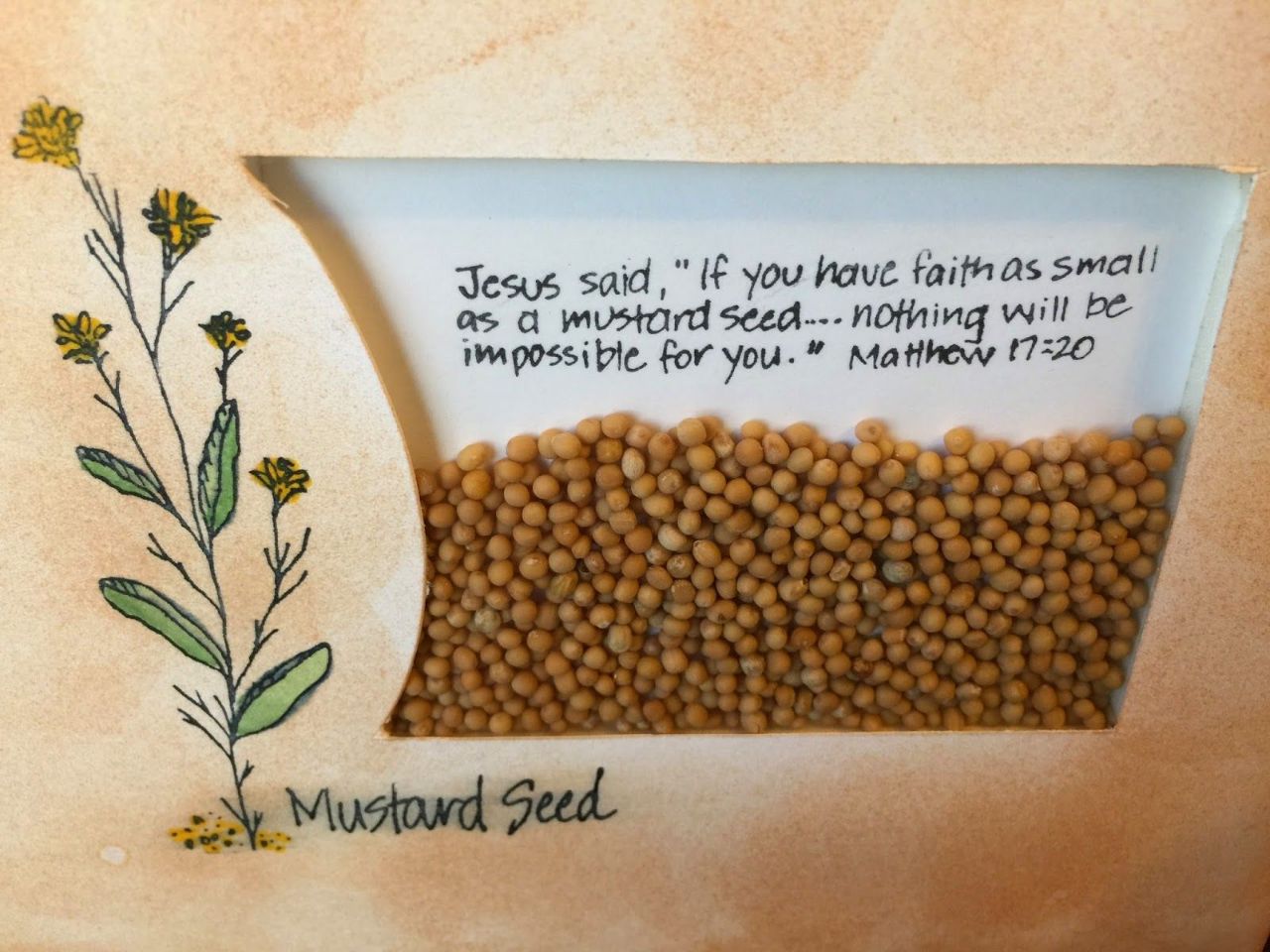
1. People with a vision
a. Who have the vision of Christ, as expressed in His parables in scriptures.
b. We need to look at the potential of the seed. One seed bears much.
c. Who look at converting and developing disciples in the same way.
2. People willing to put the kingdom of God first in their lives.
a. The seed of the gospel will produce fruit, but only if it falls on good soil.
b. People need to put the kingdom of God first - Matthew 6:33
3. People willing to abide in Christ
a. For apart from Christ they can do nothing - John 15:4-5
b. For only they are able to bear "much fruit" - John 15:5
c. And only they will be able to glorify God and be His true disciples - John 15:8
4. People who knows their calling.
We all have a calling in our life. It is time that we do what we are called for to fulfil our destiny in Christ.
We have the mustard seed in us. It has great potential. It is time to activate it and sow seeds here on earth.
5. Willing people ARE needed - Nothing is impossible. The Kingdom's growth rest on each one of us who reigns.
a. Those who will abide in Christ can be used by Him to produce the remarkable growth in the kingdom illustrated by this parable
b. The Word of God is the truth - Paul wrote to the Philippians: "I can do all things through Christ who strengthens me." - Philippians 4:13