Parable of the Dragnet
Scripture: Matthew 13:47-50 (NIV)
"Once again, the kingdom of heaven is like a net that was let down into the lake and caught all kinds of fish. When it was full, the fishermen pulled it up on the shore. Then they sat down and collected the good fish in baskets, but threw the bad away. This is how it will be at the end of the age. The angels will come and separate the wicked from the righteous and throw them into the blazing furnace, where there will be weeping and gnashing of teeth".
A. Introduction.
This parable is only recorded in Mathew. Jesus told this parable only to his disciples. It is similar to the parable of the weeds and tares (Matthew 13:24-41). There are some differences. Both emphasize judgment day and the separation between good (righteous) and evil (wicked) people.
The parable of the net compares the kingdom of heaven to a net which is cast into a lake or sea and drawing every kind of fish. When the net is filled it is drawn to the shore and then the good is separated from the bad. The separation will take place between the righteous and the un-righteous. This complete process is like the kingdom of heaven. Every part plays an important role in this parable.
The dragnet is a vertical trawling net that was weighed down at the bottom with floats at the top and secured between two boats. The net then scrapes every that is caught in the net. All kinds of fish are then trapped inside the net.
When it is full it is then dragged to the shore or beach. Here it is sorted by the fishermen. The fishermen will then keep the good fish and throw the bad ones back into the lake or sea. The bad fishes have no value to the fishermen. The sorting takes place on the shore or beach. 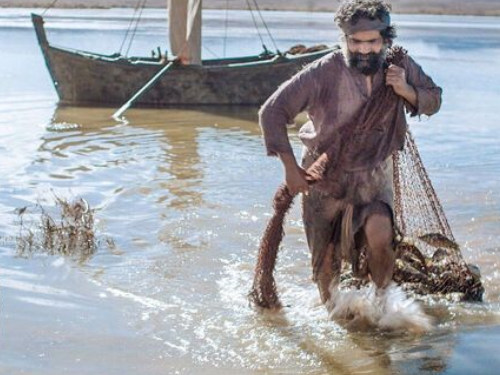
B. Purpose of the Parable of the Dragnet.
Through this parable believers of today can see the purpose of it.
1. The Kingdom of Heaven is Spiritual and not material.
2. God's purpose here on earth.
3. The Church has a 3 part purpose:
2015a. The mission of the Church
2015b. The mandate of the Church
2015c. The message of the Church
4. The responsibility of every believer.
5. The Kingdom of God/Heaven is "within you".
6. The wicked will be eternally lost in the end.
C. Key Symbols and their meanings.
1. Net or dragnet.
The Greek word used describes a dragnet - the actual form of the net is not important but it plays a very important part. Any kind of fish is caught in this net and when it is full it is dragged to the shore. What is significant is that the net was sufficiently large to catch a large number of different kinds of fish.
The "dragnet" represents the Gospel or good news. When the gospel is declared, the Holy Spirit begins to bring conviction to the human heart. The net of the gospel somehow affects the whole of humanity in this present age.
2. "Lake or sea".
This is symbolic of the mass of humanity, for the sea or lake is used symbolically of the nations or the human race. This refers to all people all over the world. Nobody is excluded.
3. "Fish".
The "fish" refers to all types and kinds of people in the world who are confronted with the gospel and convicted by the Holy Spirit. The fish represent everyone, believers and non-believers of every religious faith, including Muslims, Mormons, Catholics, Christians, Atheists, etc. Fish also represent people of every age, sex, race, ethnicity and class, without discrimination.
4. "Full".
The sorting cannot take place while the net is in the sea. When the net was full with fish it was dragged to the shore so the sorting can take place. It symbolizes the spread of the Gospel to all corners of the earth. It means that God is satisfied; His message has been delivered to all who need to hear it.
This state of fulfillment occurs when the Good News message has been preached to the ends of the earth and God is pleased with the efforts of His followers. There will come a time when God's purpose is completed in his Church, referred to as the Church Age. Then the end of Age time will be reached.
5. "Fishermen"
There are two kinds of fishermen in this parable.
2015a. The fishermen who is casting the net.
The disciples of the Gospel have been given the task of spreading the Word of God to every corner of the world. It also refers to all the believers who are fishers of men.
It is the duty of the disciples (believers) to preach the Gospel. They need to be the messengers of God's love and forgiveness. They must not concern themselves with who will be saved or not, but rather focus on spreading the message to as many people as possible. In their quest to gather the souls of every kind, the disciples (believers) must cast their net wide and far, leaving no stone unturned.
This includes all the disciples and apostles who gathered souls from all over the world.
This will represent the time frame since the Church age started and when the Church age ends.
2015b. the fishermen who is doing the sorting at the end.
Jesus indicates at the end of his parable that these fishermen represent the angels who will come "at the end of the age" and "separate the wicked from the righteous".
6. "Pulled up on the shore or drew to shore".
This refers when the harvest will be sorted out and separated into good and bad fish. This means that the process of harvesting fish has come to an end.
This process talks about "the end of the age."
When God's angels pull in the great dragnet one day and the "fish" are sorted, that is what will distinguish the good from the bad - not a man's wealth, not his power and glory in this world or his position, but whether his heart is right with God.
7. "Good".
The good fish represent those who respond to Jesus Christ by faith, receiving His righteousness. Men are declared righteous only because of their relationship to Jesus Christ (in Christ).
It is the heart and spirit of man that counts in the kingdom of God.
8. "Bad".
The bad fish represent those who do not have Christ as their personal Lord and Saviour. They have rejected Jesus Christ and therefore have no righteousness that makes them acceptable to God.
9. "End of age"
The "age" Jesus refers to here, begins with the establishment of the Church in Acts 2 at Pentecost and ends at the end of the age. This phrase is used five times in the N.T. in Matthew. Since the righteous will be separated from the wicked I think this refers to the ending of the Church age here on earth.
This marks the conclusion of the Gospel ministry. The preaching of the Gospel will cease. The disciples, ministers, believers who have been spreading the Gospel have now completed their work.
10. Angels
It means messengers (reapers Matthew 13:24-41) from God and they will do the separation. The Lord says that the angels will do the dividing between the good (just) and the bad (wicked) at the end of the age.
Angles will be Christ's servants to separate believers from unbelievers; that is, those who truly follow Christ and those who do not. These angels with God's full authority will cast the unbelievers into the fiery furnace of hell where there will be weeping and gnashing of teeth. For some, this may be a time of sadness or mourning, but it should be a time of celebration.
D. Spiritual Meaning of this parable.
Jesus told this parable to illustrate that the kingdom of Heaven will gather a diverse multitude all over the world, but in the end, there will be a definitive separation of the righteous from the wicked. No one is outside the reach of God's net. His net is one of love and kindness that catches all and leads some to repentance.
Jesus told this metaphor to communicate the reality of the final judgment. A day of judgment is coming when God will separate the good from evil. The righteous will live in eternity with Him in Heaven while the wicked will perish in Hell.
E. Lessons for us on this parable.
1. The Gospel is for ALL people in the World.
One key lesson is that the net is cast wide to gather fish of all kinds, symbolizing that the Gospel is offered to all people, regardless of their background.
2. God's Omniscience.
The parable illustrates that God knows our hearts and our true nature. There is no pretending with God.
He knows those who are sincere in their faith and those who are not. He loves all people in the world.
3. Judgment Is Certain and Coming.
The parable serves as a reminder that a day of judgment will come when true believers will be separated from those who are not. All wicked people who have ever lived will be held accountable for their deeds by being judged by God.
4. The Value of Genuine Faith
It is emphasizing the importance of having a genuine faith, not just a superficial appearance of serving God. Genuine faith is not merely an intellectual acceptance of facts about Jesus Christ and His teachings; it's a heartfelt trust that transforms how a person lives.
In the context of the Parable of the Net, genuine faith is what distinguishes the "good fish" from the "bad".
5. The Call to Repentance.
It encourages self-examination. The call to repentance is a central theme in Christianity, emphasizing the need for individuals to turn away from sin and toward God. Repentance involves a sincere heart change, not just a superficial alteration of behavior. It is about a deep transformation that affects one's thoughts, attitudes, and actions as a believer.
6. We are in the period of the "End of the Age" (Church Age).
We still live in the grace period. We did not reach the end of this age yet (Church Age). There is still a time of grace for those who did not accepted Jesus as their Saviour.
7. Punishment.
At the end the evil will be excluded from God's kingdom. It will not be an excuse to say you did not know or you did not have a chance. The punishment of the "wicked" is described in Matthew 13:50
F. Conclusion.
a. This parable focuses on the destiny of the wicked people.
b. Present state of the Kingdom of Heaven - Contains the good and the bad.
c. Future state of the Kingdom of Heaven - Contains only the righteous people,
d. If believers are to proclaim the "gospel of the kingdom" faithfully":
20151. Believers must continue to preach the "good news" of the kingdom.
20152. Believers must also tell or inform people of the "bad news".
Christ revealed this through His parables and other teachings! People must be aware of the consequences if they reject Jesus Christ as the Savior of this world.